
7 Effective Solutions for Trees That Don’t Bear Fruit (Including Mulberry)
A guide to the causes and 7 effective solutions for trees that do not bear fruit. Practical care and yield improvement methods applicable to all trees, including mulberry.
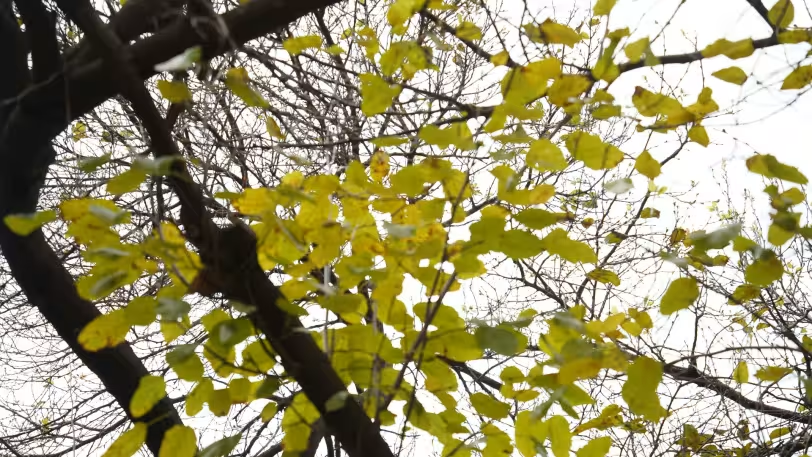
trees that don’t bear fruit are a common issue many garden owners face. The lack of productivity may not be tied to a single factor; age, maintenance mistakes, soil conditions, and pruning all influence the process. In this guide, the causes of fruiting problems in different tree species—including mulberry—are explained along with practical solutions in a clear structure.
Why Do Trees Fail to Bear Fruit?
trees that don’t bear fruit often lose productivity due to improper care practices or environmental conditions. Correctly identifying the source of the problem is the first step toward a solution.
- The tree may not have reached fruit-bearing maturity yet
- Incorrect or irregular pruning may have been done
- The soil may lack sufficient nutrients
- It may not be receiving enough sunlight
- Excessive or irregular watering can weaken roots
- Pollination may be insufficient
- Diseases or pests may hinder development
7 Effective Solution Methods
1. Prune Correctly
Improper pruning prevents flowering. For trees that don’t bear fruit, pruning should be done according to the correct season.
2. Soil Analysis and Fertilization
If the soil is low in nutrients, organic fertilizer or mineral supplements should be applied.
3. Ensure Adequate Sunlight
Locations that receive at least 6 hours of sunlight daily support fruit formation.
4. Balance Watering
Avoid both overwatering and underwatering. Balanced moisture is critical for root development.
5. Support Pollination
If necessary, cross-pollination with different varieties should be ensured.
6. Apply Grafting
Grafting is an effective method, especially for species like mulberry. Productivity can be improved with bud grafting techniques.
7. Control Diseases and Pests
The plant should be checked regularly, and early intervention should be carried out.
Special Note for Mulberry Trees
Productivity in mulberry trees can be increased through grafting. It has been observed that fruit can be obtained in a short time after proper grafting techniques are applied. This method is especially effective for wild and unproductive trees.
How to Adapt for Different Tree Species
trees that don’t bear fruit may require slight variations depending on the species, but the core principles remain the same. When proper care balance is achieved, yield improvements can be seen in trees such as apple, pear, cherry, or mulberry.
Proper care + correct timing = healthy and productive trees